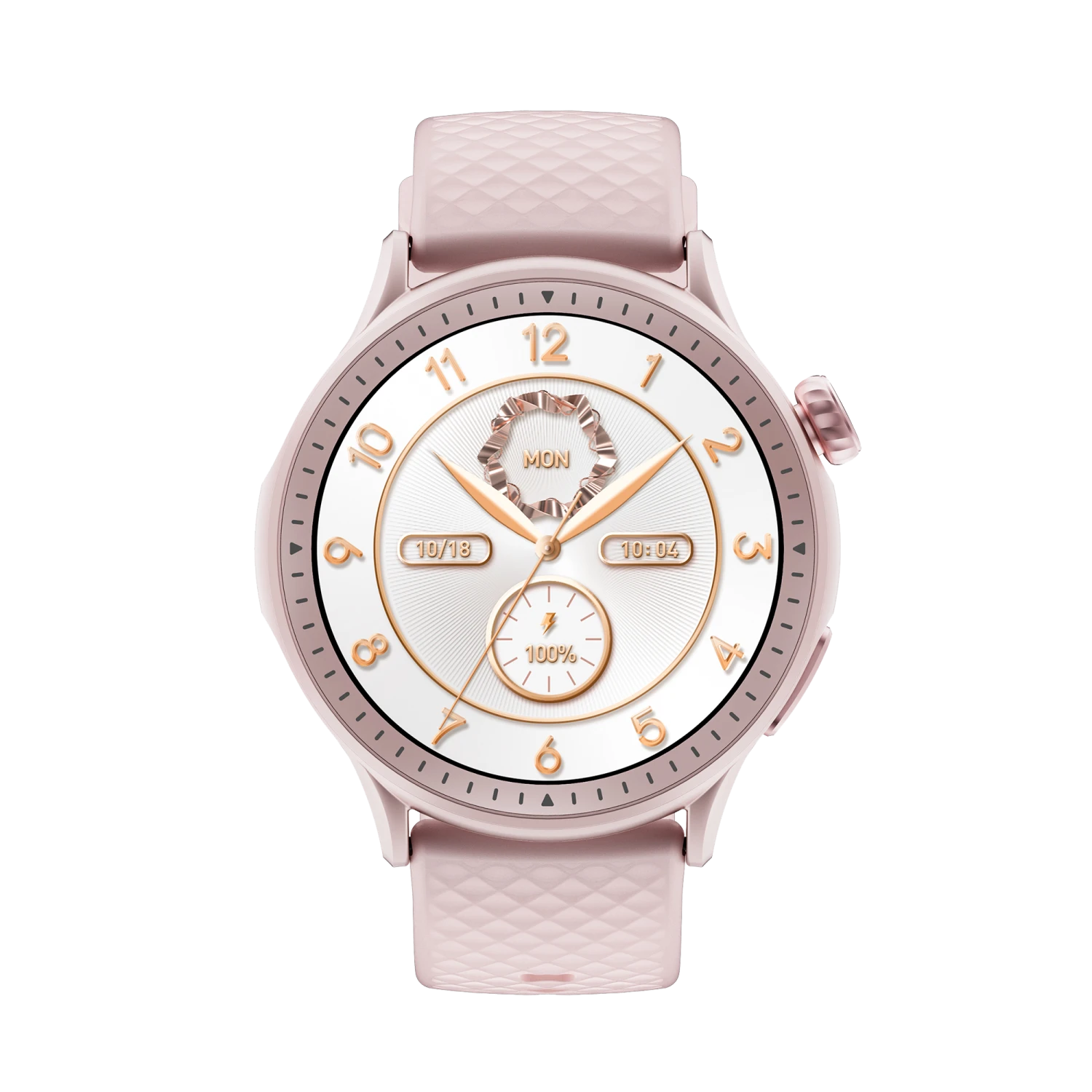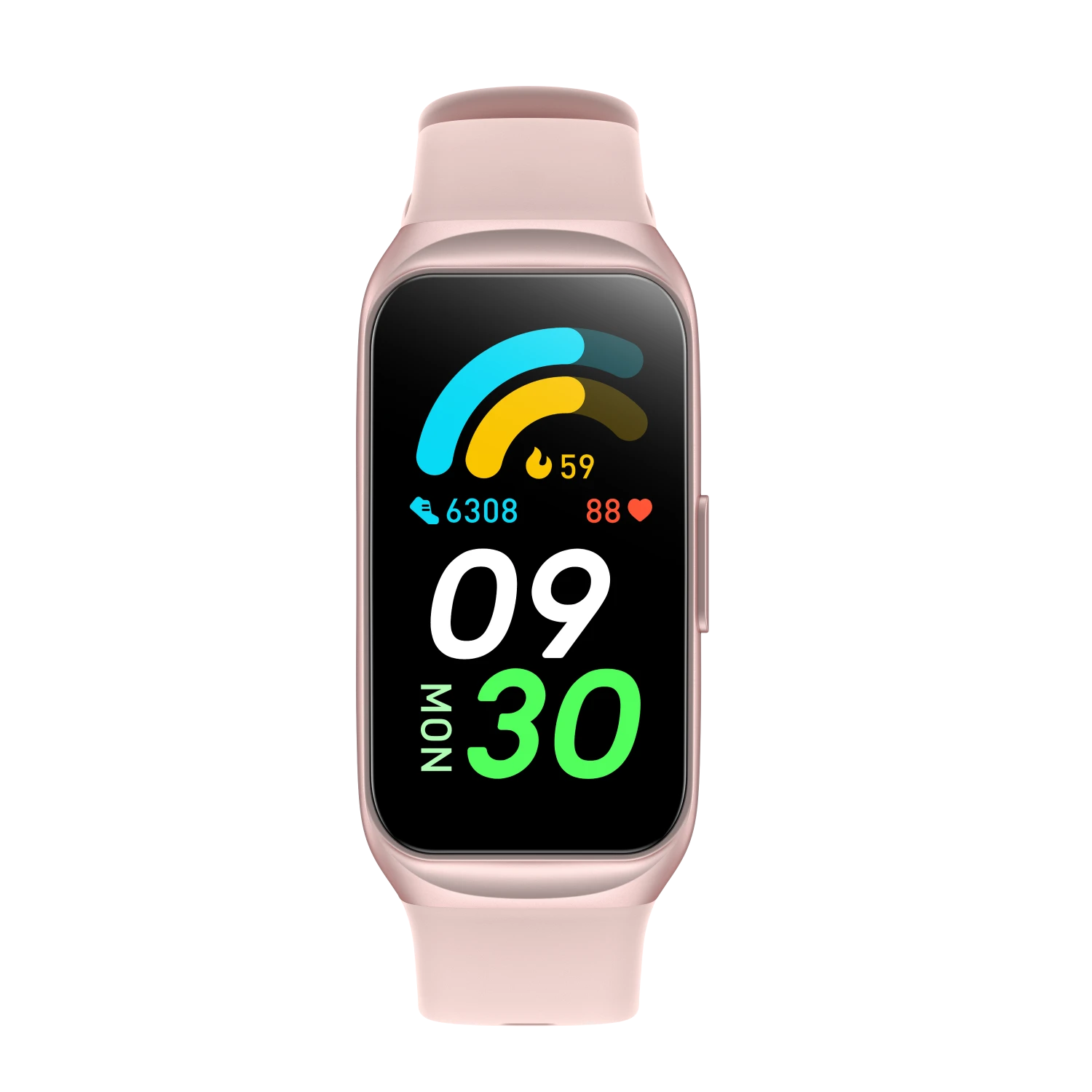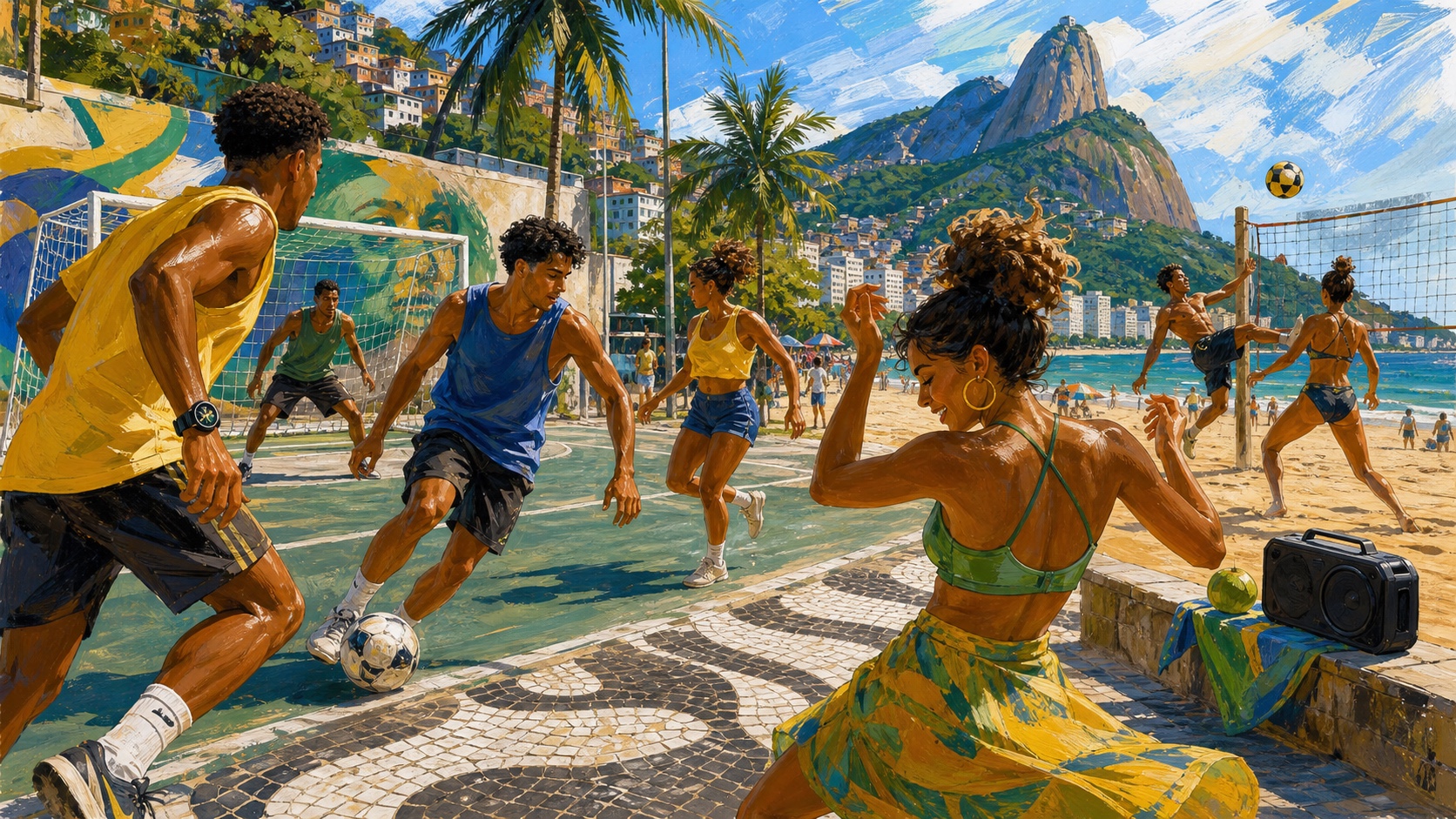
World Cup sports habits reach far beyond what happens on the pitch. Football culture often spills into walking, commuting, meals, sleep, social time, and the way people use parks, streets, beaches, and local courts. This guide looks at 16 well-known participating countries, excluding the United States and very obscure small nations, and turns their everyday movement habits into ideas you can track with Runmefit.
Mexico: heat-aware football and evening movement
What people tend to enjoy
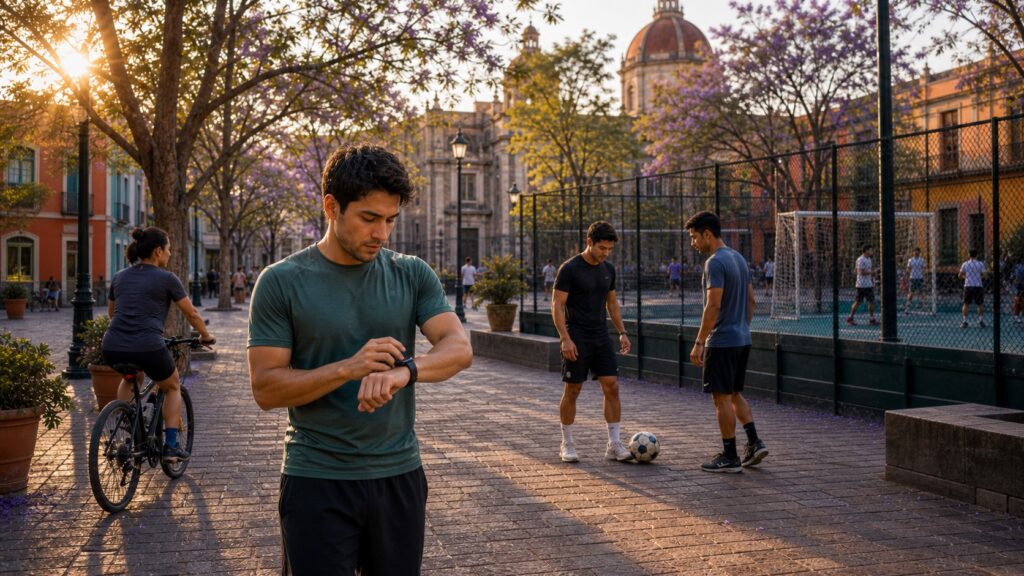
Mexico is strongly tied to football, but daily movement goes well beyond the pitch. Casual five-a-side games, boxing-style conditioning, neighborhood runs, dance fitness, and family walks can all fit into the week. The part worth borrowing is simple: movement is easier to keep when it has a social reason.
Weather matters too. Harder activity often feels better in the morning or evening, while shaded streets, public parks, and plazas make lighter walking easier. For you, that means matching effort to temperature instead of forcing the same routine every day. A Runmefit device can track steps, workout time, and heart rate trends at different times of day, which makes it easier to see when the body feels more comfortable.
Mexico also belongs in this article because it is one of the 2026 host nations. The World Cup conversation will include local football parks, city walking, fan travel, and long days outdoors. You can check the official FIFA World Cup 26 tournament page for event context, then bring that energy down to a routine that is much easier to repeat: a short walk before work, a casual evening match, and a calmer bedtime window after social nights.
For wearable tracking, Mexico shows why time of day matters. A 25-minute walk at noon and the same walk after sunset may feel very different. Runmefit users can compare similar routes across several days instead of judging one hot session too harshly. The watch does not explain everything, but it gives you a useful reference point.
Healthy habit to borrow
Borrow Mexico’s heat-aware pacing. Put harder sessions outside the hottest hours, keep water nearby, and use evening walks as a softer way to move after long sitting periods. A watch cannot replace judgment, but it can make repeated patterns easier to notice.
Try a Mexico-inspired week: one football or court session, two shaded walks, one easy mobility day, and one family or friend walk after dinner. If the week gets crowded, keep the walking habit and reduce the intense session first. Daily consistency survives better when the routine has a social reason.
Brazil: social movement that feels natural

What people tend to enjoy
Brazil’s football identity is famous, but its broader movement culture is just as useful for everyday wellness. Futsal, beach volleyball, running, dance, capoeira-style movement, and casual games make activity feel expressive and communal. Movement often happens with music, friends, sand, streets, or local courts.
That is helpful for people who find formal exercise dull. A short football game, a dance class, or a beach walk can all count as part of a healthy routine. Runmefit sport modes and step tracking can support that variety without turning it into a rigid plan.
Brazil also shows how football can become a whole movement language. Futsal builds quick changes of direction. Beach football and footvolley add sand, balance, and coordination. Dance and capoeira-style movement bring rhythm and mobility.
For background reading, the overview of football in Brazil gives useful cultural context, while footvolley shows how beach culture shaped a sport that blends football touch with volleyball-style play. Those links are not workout instructions. They are reminders that sports habits grow out of available spaces: courts, beaches, streets, parks, and friends.
Runmefit can make mixed movement easier to see. A week might include one casual football game, one beach or park walk, one dance-based session, and several step-heavy days. The numbers may not look as neat as a training plan, but the pattern can still be meaningful.
Healthy habit to borrow
Borrow Brazil’s social movement pattern. Choose one activity that involves other people, music, or a place you enjoy. When movement has a reason beyond discipline, it becomes easier to repeat.
The Brazil-inspired habit is simple: choose joy before intensity. A relaxed game with friends may be easier to repeat than a lonely session that feels too strict. Use wearable data afterward to notice duration, effort, and sleep, then let the experience stay human.
Argentina: rhythm, football, and recovery time
What people tend to enjoy
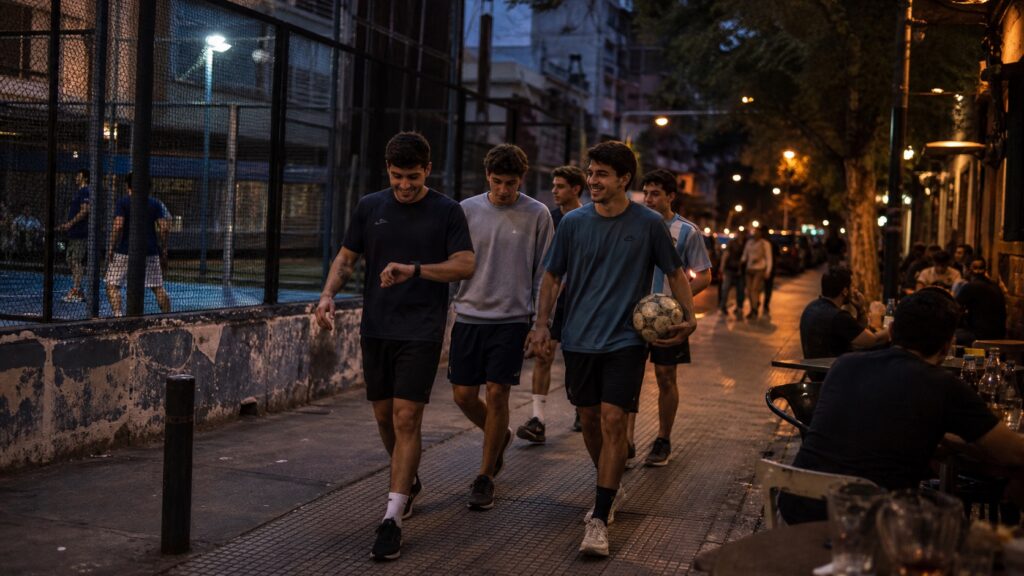
Argentina brings a passionate football culture, along with padel, running, cycling, gym work, and long city walks. It is a useful reminder that intense sport and slow recovery can belong in the same week.
For everyday users, that balance matters. A casual match may raise heart rate and step count sharply. The next day may call for a slower walk, a mobility session, or an earlier night. Runmefit sleep tracking can help you notice whether late matches, caffeine timing, or evening excitement affect rest.
Argentina’s football culture often sits beside a social rhythm: late conversations, club culture, city walking, and weekend sport. Padel has also become part of many urban routines because it is social, skill based, and easier to schedule than a full-size football match. You do not need to copy the exact sport. They can copy the balance between intensity and recovery.
Watch a match, play a short game, walk home instead of sitting immediately, and check sleep the next morning. That small loop makes fan energy useful instead of only emotional.
Healthy habit to borrow
Borrow Argentina’s rhythm over intensity. Let one passionate sport session anchor the week, then protect lower-pressure recovery time around it. If a workout feels unusually hard after poor sleep, treat the data as context, not as a command.
A Runmefit routine inspired by Argentina might mark three moments: the sport session, the post-match walk, and the following night’s sleep. When those moments repeat, you can see whether late activity supports or disrupts their personal rhythm. The answer will not be the same for everyone, which is exactly why tracking can help.
France: balanced movement built into daily life

What people tend to enjoy
France is a strong football nation, but many everyday routines also include cycling, walking, swimming, tennis, and weekend hiking. The useful idea is balance. Movement can be part of commuting, leisure, errands, and club sport rather than one isolated workout block.
Walkable streets and local sports clubs make light activity easier to repeat. For Runmefit users, the tracking approach can stay simple: monitor steps on ordinary days, start a sport mode for structured sessions, and review sleep after busier evenings. The aim is awareness, not pressure.
France also works as a bridge between sport and lifestyle. A person might walk to a bakery, cycle to work, swim on a weekend, and still treat football as the emotional center of the sporting calendar. The habit worth copying is not perfection. It is the ability to let movement appear in several small parts of the day.
You can use France as a model for quiet volume. Ten minutes here and fifteen minutes there may not feel dramatic, but the total becomes visible when tracked. Runmefit step data and movement reminders can help you notice when a supposedly inactive day still included useful walking, or when a desk-heavy day needs a small reset.
Healthy habit to borrow
Borrow France’s steady pacing. Build small walks into the day, use meals as natural pauses, and avoid turning every session into a maximum effort. A comfortable all-day wearable helps because the routine is spread across many small moments.
The wearable cue is to check trends at the end of the day, not every hour. If steps are lower than usual, add a calm walk. If sleep was short, choose easier movement. This is a gentle, practical style of self-awareness.
Germany: structure, clubs, and repeatable routes
What people tend to enjoy
Germany is known for football clubs, while cycling, hiking, running, swimming, and organized sports associations also shape daily activity. The strongest habit is structure. Fixed time blocks, familiar routes, and regular club sessions make movement easier to predict.
This works well for people who like clear systems. A Monday walk, Wednesday indoor workout, and Saturday football session may be easier to follow than a vague promise to be more active. Runmefit workout summaries can keep that weekly structure visible.
Germany’s club and route culture translates well into wearable routines. A repeatable route gives data context. The same 30-minute walk, the same cycling commute, or the same Saturday football session becomes easier to compare. Without repeatability, numbers are easy to misread.
Healthy habit to borrow
Borrow Germany’s structured consistency. Choose a few repeatable routines and track them for several weeks. Compare similar sessions under similar conditions. A forest walk, football practice, or bike commute becomes more meaningful when viewed as a pattern.
For a Germany-inspired setup, pick one route, one sport slot, and one rest-aware evening. Track them for three weeks. If the same route suddenly feels harder, look at sleep, weather, pace, and stress before assuming fitness has changed. The data is most useful when the context is stable.
Spain: football, padel, and rest-aware scheduling
What people tend to enjoy
Spain combines football passion with padel, cycling, swimming, running, and long urban walks. In many places, evening activity feels natural because the air is cooler and social life continues later. That does not mean every you should copy the schedule exactly. It means timing matters.
For people who train after work, Runmefit sleep tracking may be useful. Some may notice that a late intense session affects sleep, while a calm walk after dinner feels easier. These are personal patterns, not medical conclusions.
Healthy habit to borrow
Borrow Spain’s rest-aware timing. Place harder movement when it feels sustainable, and use lighter walks for days when the body needs less intensity. Sport modes are useful as memory, not pressure.
England: community accountability and everyday walking
What people tend to enjoy
England’s sports culture includes football, running groups, cricket, cycling, gym classes, and long weekend walks. Public parks, school pitches, canal paths, and local clubs help turn movement into a shared routine.
The helpful idea is accountability. A regular football match or running group gives people a reason to show up even when motivation is ordinary. Runmefit reminders can support the quieter parts of that routine: standing up after desk time, checking daily steps, and noticing whether sleep changes after late training.
England is also useful because participation data is well documented. Sport England’s Active Lives surveys measure how people take part in sport and physical activity, including walking, team sports, and fitness activities. For you, that supports a practical point: walking and community sport are not filler activities. They are part of how many people stay active.
The country also gives a good model for habit design. A weekly park run, football booking, or club night can become the anchor. Daily walking then becomes the support system around that anchor. Runmefit step tracking and movement reminders are useful here because the small supporting habits are easy to miss.
Healthy habit to borrow
Borrow England’s community rhythm. Put one recurring group activity on the calendar, then support it with simple daily walking. The routine becomes stronger when it includes both people and practical tracking.
The wearable habit is to review the whole week, not a single workout. Did the group session happen? Did daily steps collapse afterward, or stay steady? Did sleep recover after late activity? These questions help you build a routine that is social and sustainable.
Portugal: hills, coastal walks, and natural effort
What people tend to enjoy
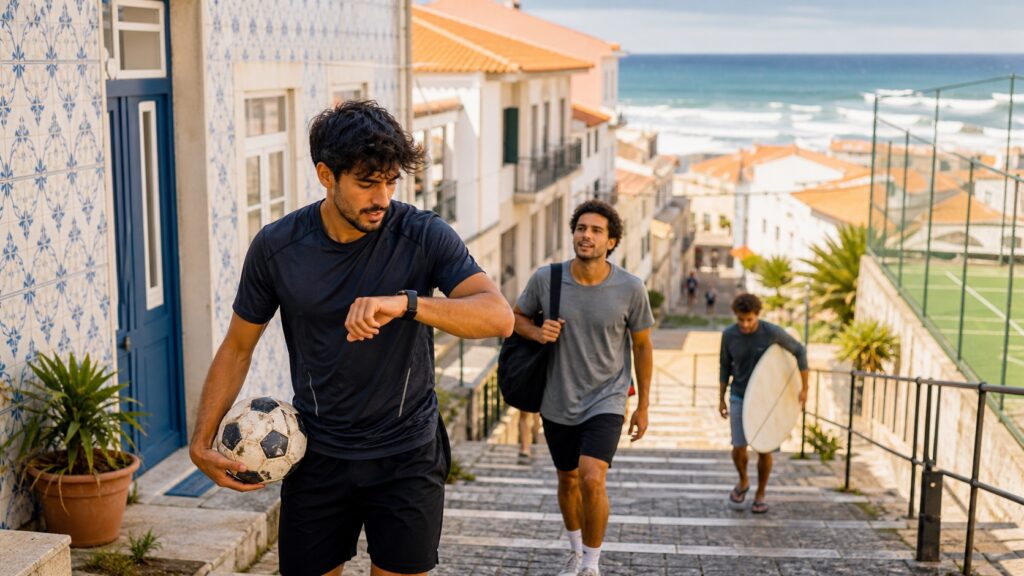
Portugal is a good example of activity shaped by place. Football, running, cycling, surfing, gym training, and coastal walking all fit the terrain. In cities with hills and stairs, ordinary routes can add real effort without turning into a formal workout.
This is where wearable tracking becomes useful. A walk that looks short on a map may feel harder because of incline, heat, or pace. Runmefit heart rate trends and step records can help users understand why one route feels different from another.
Healthy habit to borrow
Borrow Portugal’s natural incline training. Choose routes with gentle hills or stairs when energy is good, and choose flatter routes when the body needs an easier day. The same step count can feel different depending on terrain.
Netherlands: active transport as a daily foundation

What people tend to enjoy
The Netherlands is a strong reminder that movement does not always need to look like sport. Football, cycling, skating, rowing, running, and walking are common, but active transport is the standout habit. Bike lanes and practical commuting make activity part of school, work, errands, and social life.
Readers can adapt this without living in a cycling-first city. Walk to a nearby errand, park farther away, take a short route after lunch, or use a bike for one weekly trip. Runmefit step count and reminders can make those ordinary choices visible.
Healthy habit to borrow
Borrow Dutch active transport thinking. Ask, “Can this short trip include movement?” The answer will not always be yes, but when it is, the habit adds up quietly across the week.
Japan: small daily discipline and step awareness
What people tend to enjoy
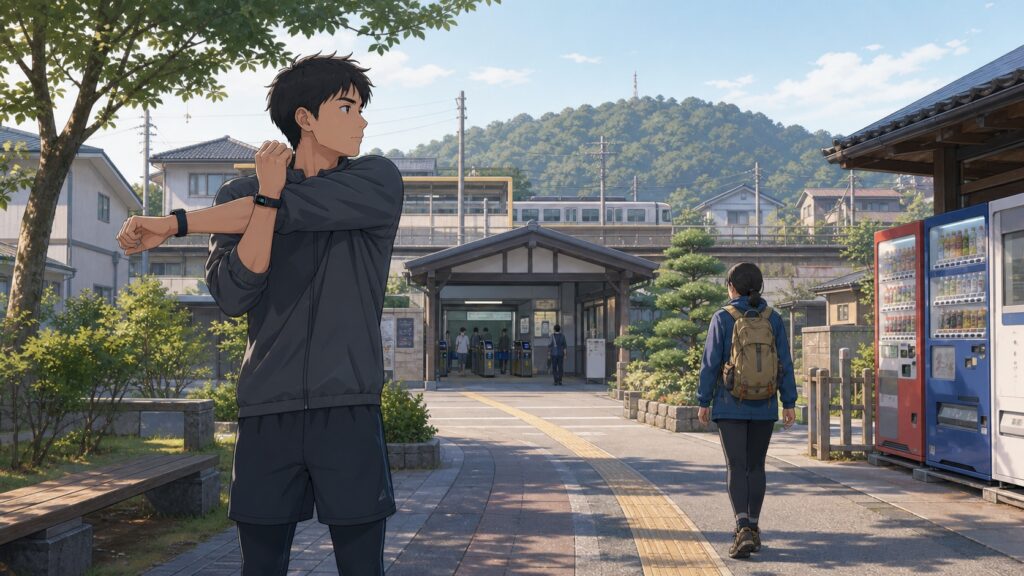
Japan’s sports culture includes football, baseball, walking, hiking, stretching, martial arts, and gym training. For everyday wellness, the most useful habit is small daily discipline. Train-station walks, morning stretching, neighborhood parks, and orderly weekend hikes can build a routine without drama.
This is a natural fit for a lightweight fitness band. Many people do not need a complicated plan. They need a clear view of steps, sleep, reminders, and a few regular workout records. Runmefit can support that quiet consistency.
Japan is especially useful for Runmefit users because the habit style is small, repeatable, and easy to track. A walk to the station, a short stretch before work, a weekend hike, or a calm evening routine may not look impressive on its own. Over a month, those small actions become the system.
For cultural sport context, the overview of sports in Japan shows how football, baseball, martial arts, school sport, and traditional activities sit together. In daily wellness terms, the lesson is not to chase novelty every day. It is to make simple movement automatic enough that it does not require a debate.
Healthy habit to borrow
Borrow Japan’s small-repeatable-habit approach. Start with a daily walk, a short stretch, or a consistent bedtime window. The goal is not to make life stricter. It is to make healthy choices easier to repeat.
A Japan-inspired week can be modest: five short walks, two stretching blocks, one longer weekend route, and a consistent bedtime target. It is not flashy, but it is measurable. That is why it works well with a simple wearable.
South Korea: hiking, football, and purposeful effort
What people tend to enjoy
South Korea combines football, baseball, hiking, taekwondo, gym workouts, and fast city walking. Mountain paths, riverside routes, office-district gyms, and weekend group hikes create a habit of purposeful effort.
A hike may be for endurance and scenery. Football may be for speed and coordination. A gym session may support strength and posture. Tracking each activity separately helps people see variety instead of blending everything into one vague total.
Healthy habit to borrow
Borrow South Korea’s focused session style. Before moving, decide whether today is a hard, moderate, or easy day. Start the relevant sport mode, then review the trend later with common sense.
Australia: outdoor timing and sun-aware activity
What people tend to enjoy
Australia’s activity culture often leans outdoors: football, rugby, cricket, swimming, surfing, running, and outdoor bootcamp sessions. Beach paths, suburban ovals, pool lanes, and shaded trails make movement part of daily life.
The main lesson is timing. Early-morning activity can be more comfortable in warm seasons, while harder sessions may need more attention to water, shade, and recovery. A Runmefit watch can help you track workout duration, heart rate trends, and sleep after sun-heavy days.
Healthy habit to borrow
Borrow Australia’s outdoor timing. Move earlier when the day will be hot, and use lighter sessions when the body feels worn down. This is practical self-awareness, not a medical rule.
Morocco: evening football and market walks
What people tend to enjoy
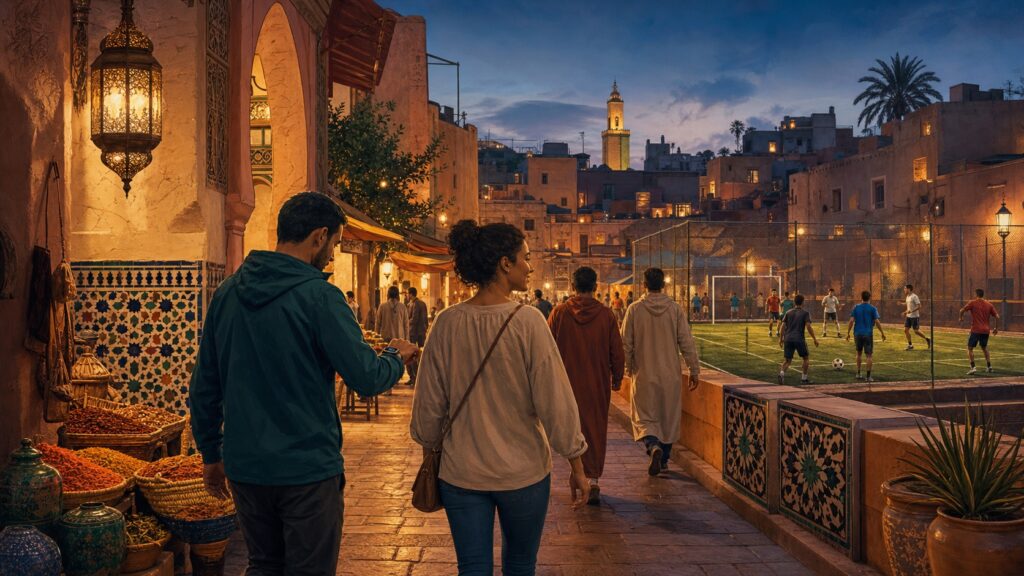
Morocco’s football culture is energetic, and many daily habits also include walking, hiking, gym training, and casual five-a-side games. Market streets, neighborhood pitches, evening walks, mountains, and coastal routes all shape movement.
Evening movement is the habit to notice. Cooler hours often make walking and casual football more enjoyable. For readers, this can become a simple after-dinner walk or a short evening activity window. Runmefit reminders and step tracking can support that habit without making it feel heavy.
Healthy habit to borrow
Borrow Morocco’s evening rhythm. Use the cooler part of the day for easy walking or social sport, especially when daytime activity feels uncomfortable. Watch the weekly pattern instead of judging one day.
Egypt: warm-evening routines and football energy
What people tend to enjoy
Egypt brings together football, walking, gym training, squash, running, and informal neighborhood games. In warm conditions, activity often feels more natural when planned around evening air, riverside routes, or indoor spaces.
For us, the lesson is to avoid forcing the hardest session into the least comfortable time. A casual football game can be paired with lighter walking on other days. Runmefit sleep tracking may also help people notice whether late movement affects their rest pattern.
Healthy habit to borrow
Borrow Egypt’s warm-evening planning. Keep movement realistic for the climate and the workday. If a session feels harder than expected, consider heat, sleep, route, and pace before judging the routine.
South Africa: varied outdoor weeks
What people tend to enjoy
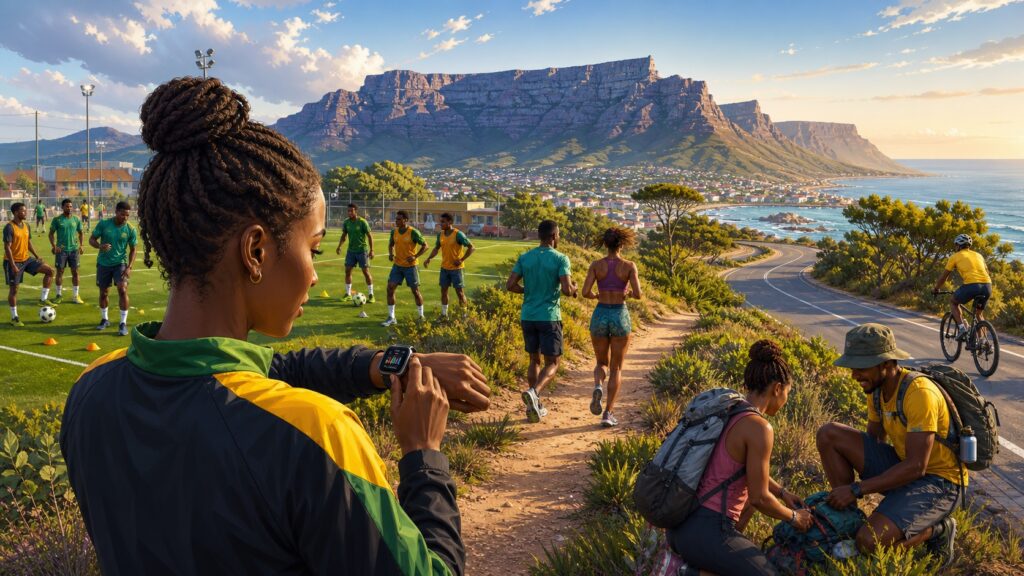
South Africa has a broad sporting mix: football, rugby, cricket, running, hiking, cycling, and gym work. Community fields, coastal roads, mountain trails, and active weekend plans make variety a strength.
Healthy habit to borrow
Borrow South Africa’s varied outdoor week. Keep one familiar anchor activity, then rotate the supporting activities. Variety can make consistency feel less repetitive while still giving the body lighter and harder days.
How to turn World Cup sports habits into your own routine
Choose a country-inspired pattern, then make it local
The best idea is not to copy another country’s lifestyle perfectly. Choose one pattern that fits your life. Mexico may inspire heat-aware pacing. Canada may inspire seasonal backups. Brazil may inspire social movement. Germany may inspire structure. Japan may inspire small daily discipline. The right habit is the one you can repeat next week.
A simple plan might include one football or sport session, two moderate walks, one short strength or mobility session, one social outdoor activity, and two lighter days. If that feels crowded, remove an intense session before removing daily walking. Small movement is often the part that keeps the whole week steady.
Track three simple signals
For most people like you, three signals are enough: steps, workout heart rate trends, and sleep duration. Steps show whether the day included ordinary movement. Workout trends show how the body responded to different activities. Sleep gives context for why one session felt smooth and another felt unusually heavy.
Runmefit devices are not medical devices and should not be used for clinical decisions. They are useful daily companions for noticing patterns over time. If a health concern feels unusual or persistent, consult a qualified professional.
Runmefit product recommendation
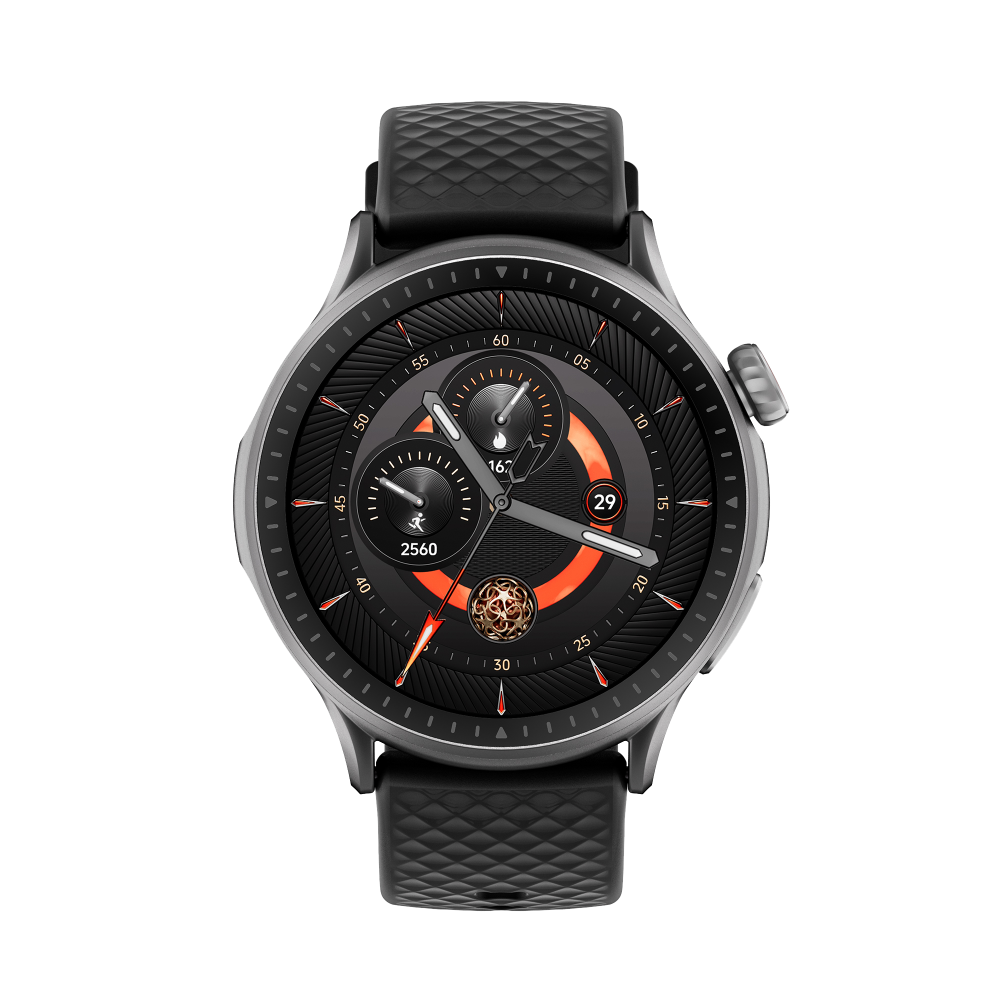
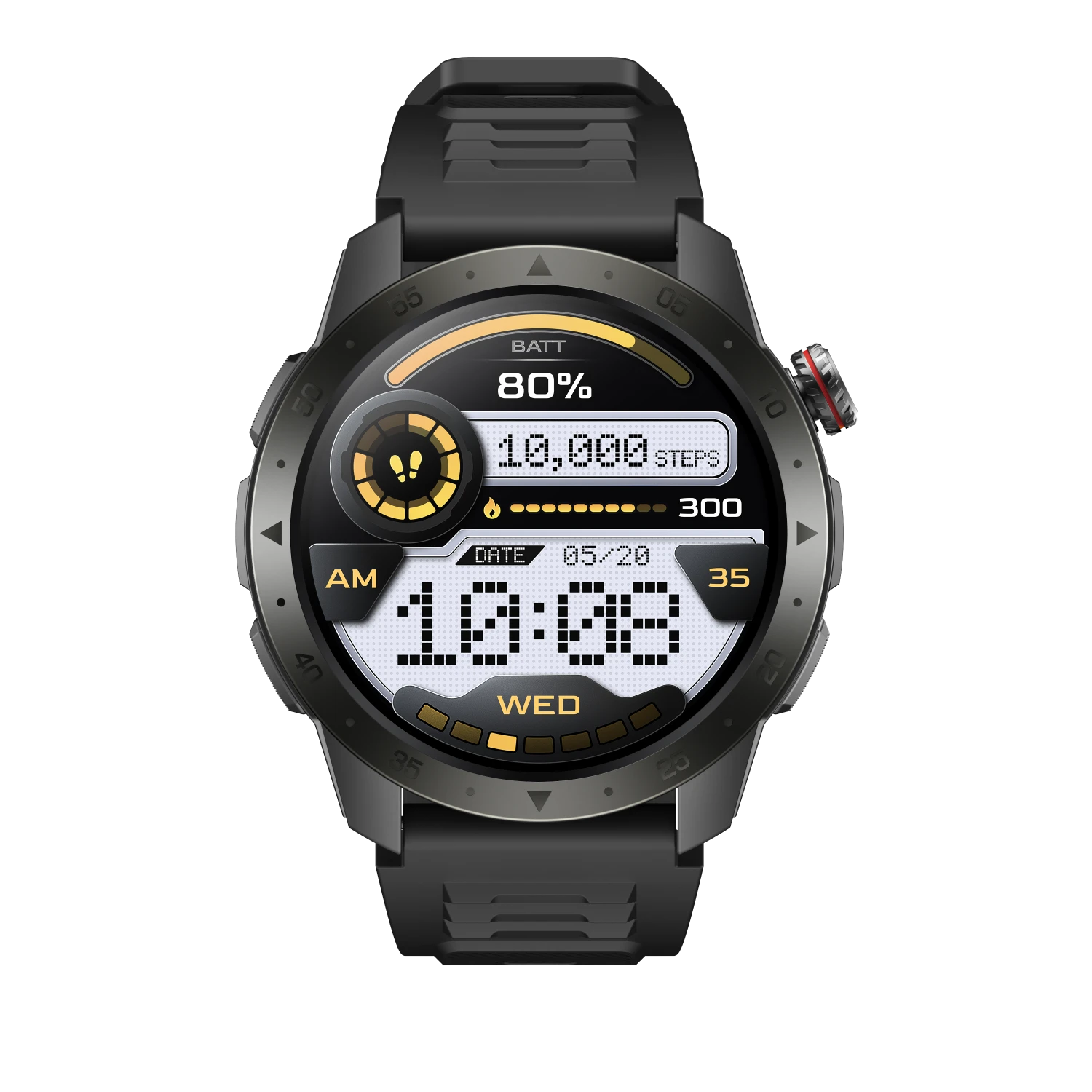
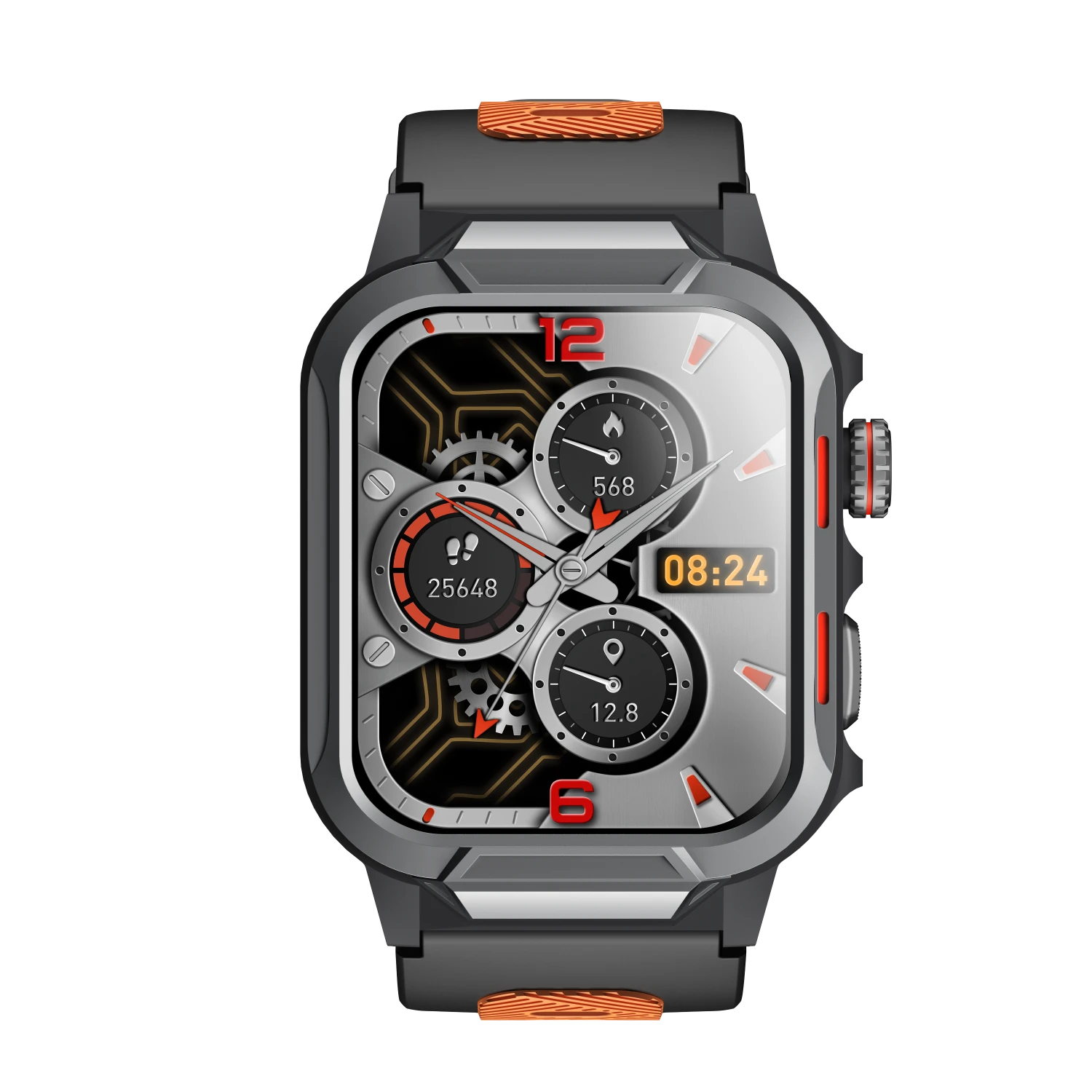
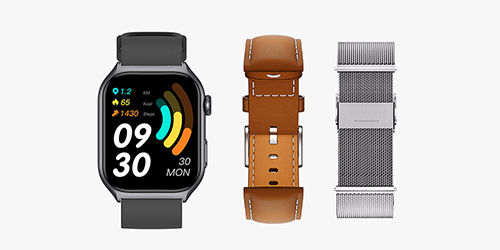
Runmefit RACER 4 Watch
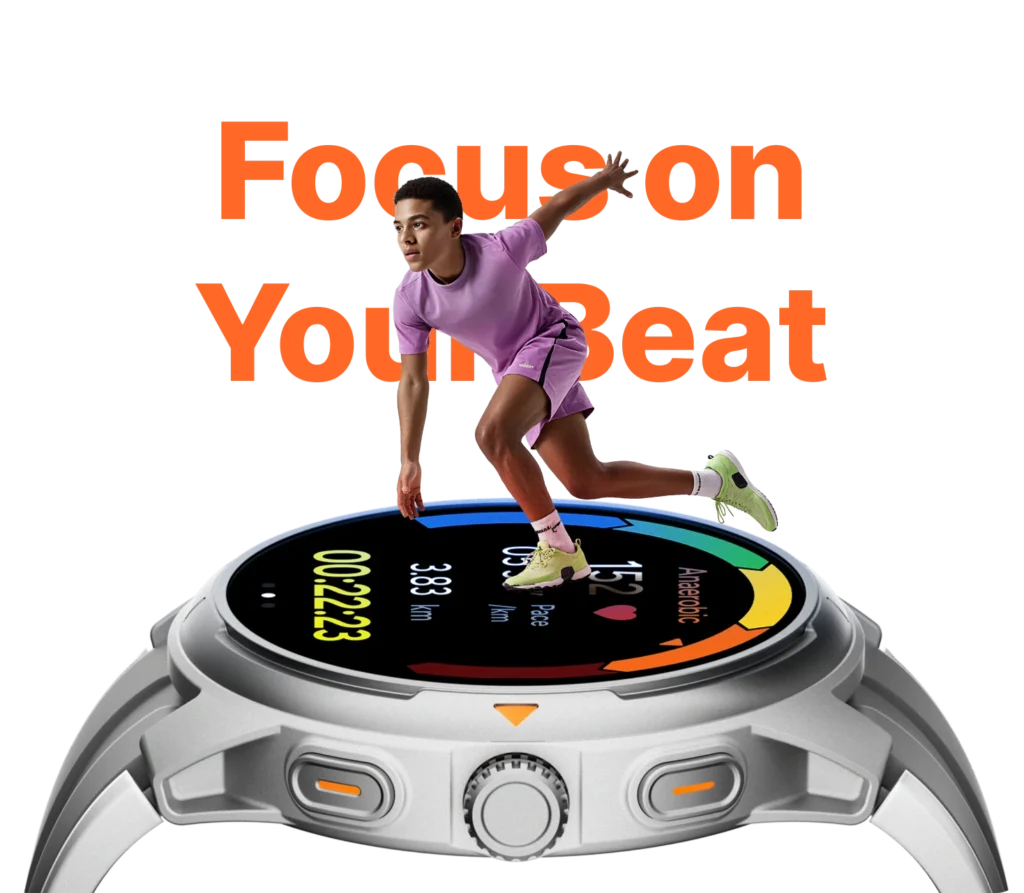
Best for: people who want to track football, walking, outdoor activity, sleep, and daily movement patterns inspired by World Cup countries.
Key features:
- Multiple sport modes for football, walking, running, cycling, indoor workouts, and outdoor routines
- Heart rate, step count, sleep tracking, and daily movement reminders
- Comfortable all-day design with long battery life for busy schedules
Why it fits this topic: World Cup sports habits stretch beyond match day. They include the walk to the pitch, the evening recovery stroll, the short commute, the weekend hike, and the sleep pattern after a late game. Runmefit helps make those small patterns visible, so you can build routines with more awareness and less guesswork.
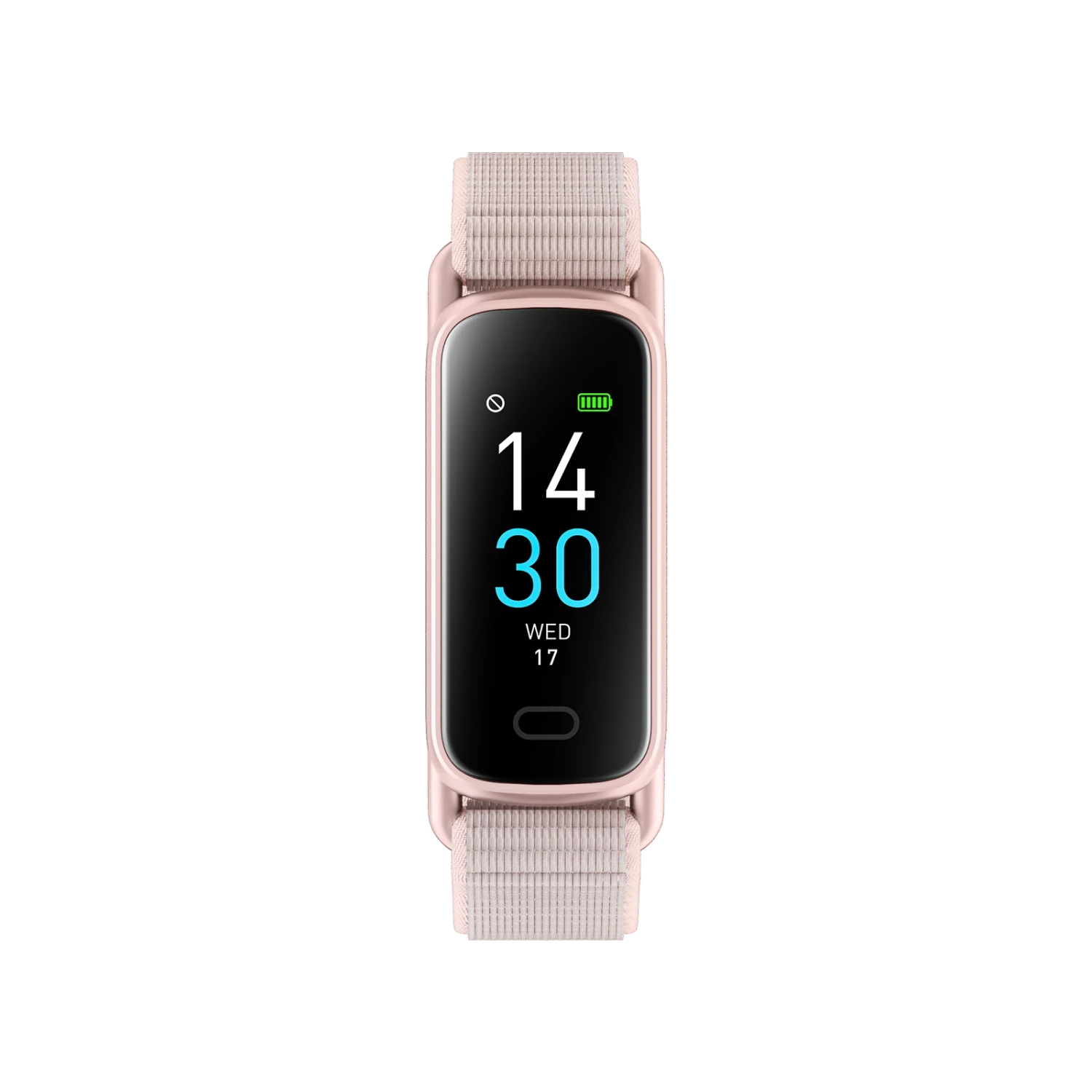
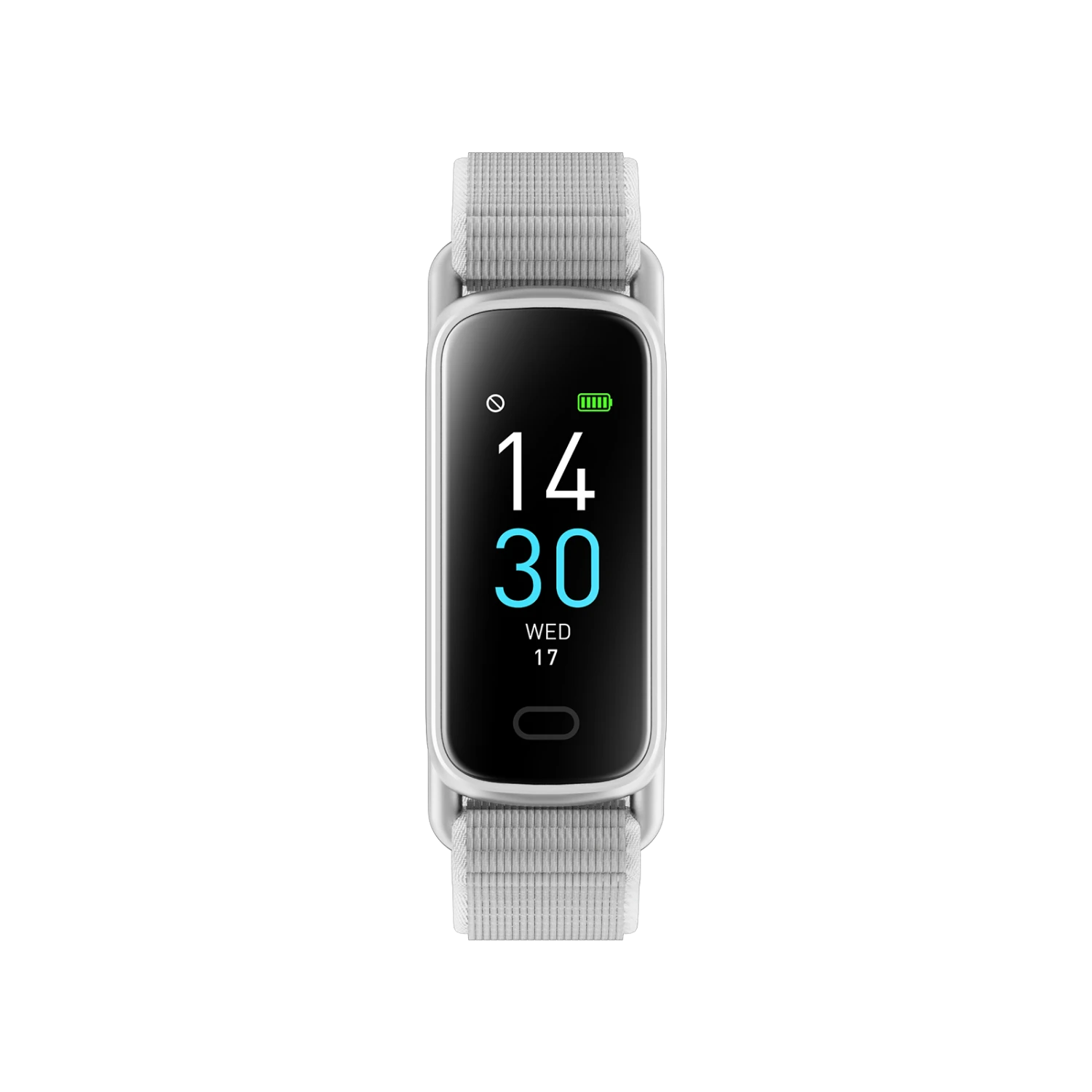
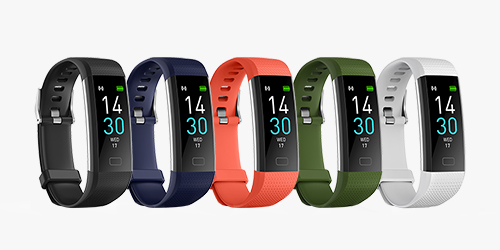
Runmefit Fitness Band GTL1
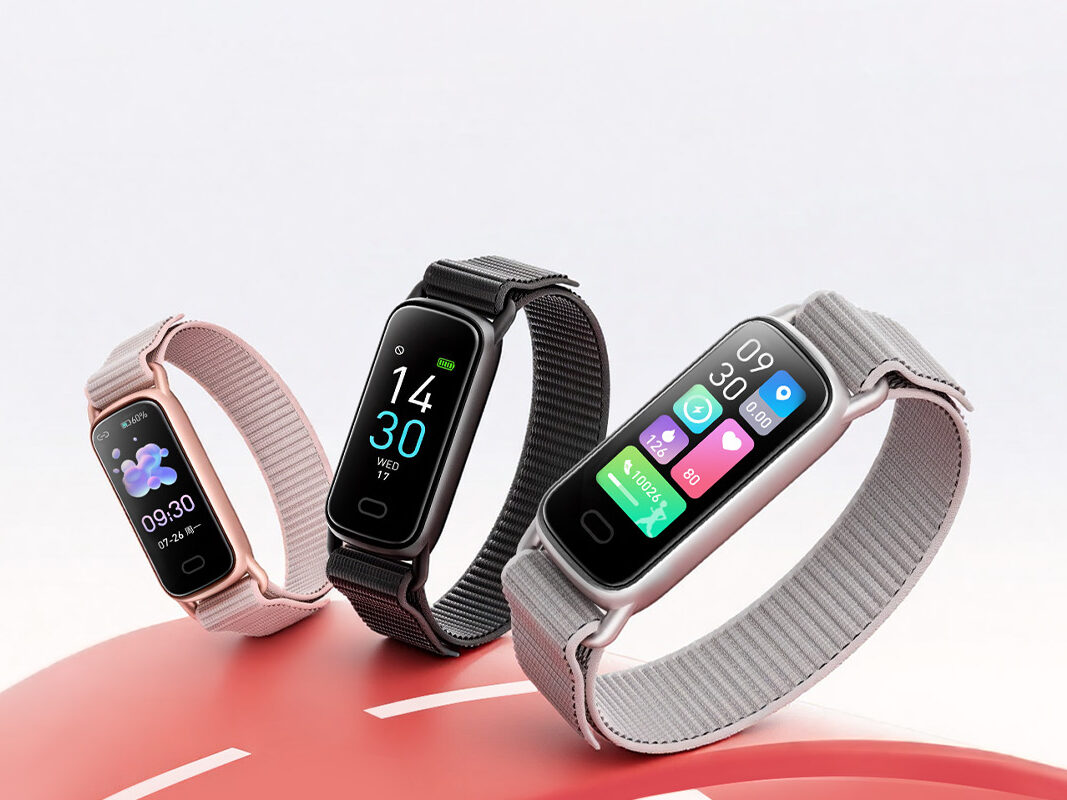
Best for who prefer lightweight daily tracking for steps, sleep, reminders, and simple activity routines.
Key features:
- Lightweight comfort for all-day wear
- Step count, sleep tracking, heart rate reference, and movement reminders
- Simple daily records for walking, casual sport, and routine building